

Few things beat a hot, crispy aloo paratha on a cold Sunday morning, served with white butter, achar and a cup of doodh patti. This aloo paratha recipe gives you soft dough, a spicy potato filling that does not leak, and a golden, flaky paratha every time. It is written for normal Pakistani kitchens: a tawa, a rolling pin and ingredients you already have at home.
If your parathas tear while rolling or turn hard after cooking, the tips below will fix that. The recipe makes 6 medium parathas, enough for a family of three or four.
Ingredients for Aloo Paratha
For the dough
- 2 cups chakki atta (whole wheat flour)
- 1/2 teaspoon salt
- 1 tablespoon oil or ghee
- About 3/4 cup lukewarm water (add slowly)
For the filling
- 4 medium potatoes (about 500 g), boiled and peeled
- 1 small onion, very finely chopped (optional)
- 2 green chillies, finely chopped
- 2 tablespoons fresh coriander, chopped
- 1 teaspoon salt, or to taste
- 1 teaspoon red chilli flakes or red chilli powder
- 1 teaspoon roasted and crushed cumin (zeera)
- 1 teaspoon crushed coriander seeds
- 1/2 teaspoon anardana (dried pomegranate seeds) or 1/2 teaspoon chaat masala
- 1/2 teaspoon garam masala (optional)
For cooking
- Ghee, butter or oil, about 1 teaspoon per side
- Dry flour for dusting
Step 1: Make the Dough
Mix atta and salt in a bowl, add the oil and rub it in with your fingers. Add lukewarm water a little at a time and knead into a soft, smooth dough. It should be softer than roti dough but not sticky. Knead for 4 to 5 minutes, cover with a damp cloth and rest for at least 20 minutes. Resting makes the gluten relax, so the dough stretches without tearing.
Step 2: Prepare the Aloo Filling
Boil potatoes until just tender, not watery. Let them cool completely, then peel and grate or mash them very well. Lumps are the main reason parathas tear, so mash until smooth.
Add onion, green chillies, coriander and all spices. Mix with your hand and taste; the filling should be a little saltier and spicier than you like, because the dough will balance it. Divide into 6 equal balls.
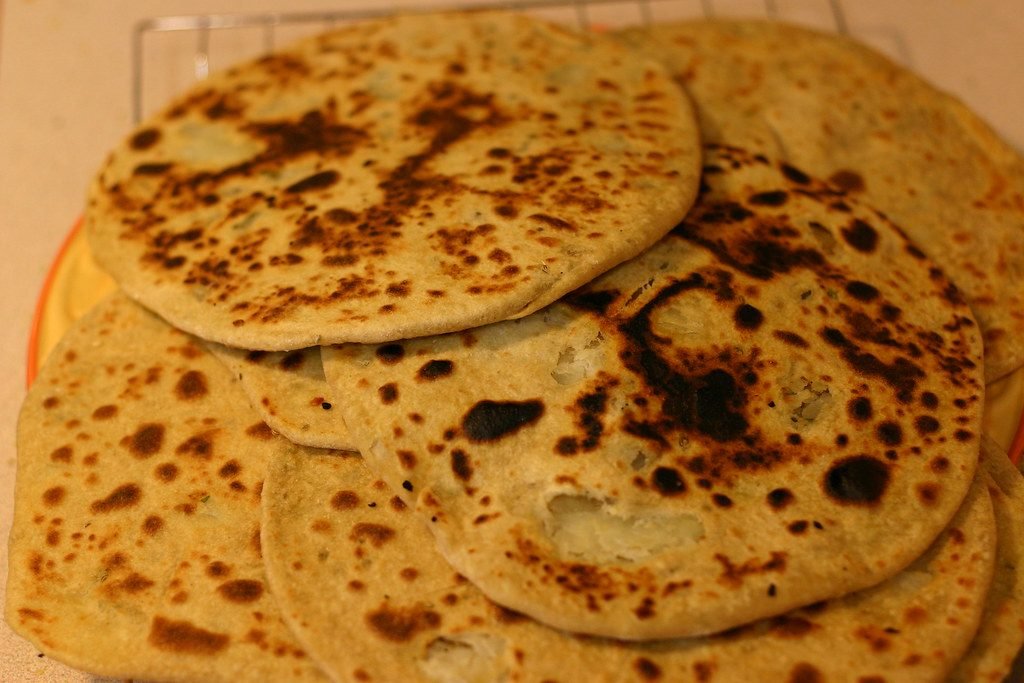
Important: if you add onion, add it just before stuffing. Salted onion releases water and makes the filling wet, which causes leaks.
Step 3: Stuff and Roll the Paratha
| Step | What to do |
|---|---|
| 1 | Divide dough into 6 balls, a little bigger than the filling balls. |
| 2 | Roll one dough ball into a small 4-inch circle, keeping the edges thinner than the centre. |
| 3 | Place a filling ball in the middle and bring the edges up like a potli (pouch). |
| 4 | Pinch and seal the top, remove extra dough, and flatten gently with your palm. |
| 5 | Dust with dry flour and roll gently from the centre outwards into a 7 to 8-inch circle. |
| 6 | If a small hole appears, patch it with a pinch of dough and dust with flour. |
Use light pressure. Pressing hard pushes the filling out. Turn the paratha a quarter circle every few rolls so it stays round.
Step 4: Cook on the Tawa
Heat a tawa on medium-high. Place the paratha on the hot tawa and cook for about 30 seconds until small bubbles appear. Flip it and cook the other side for another 30 seconds.
Now spread ghee or oil on the top side, flip, and press the edges gently with a spatula. Apply ghee on the second side and flip again. Cook until both sides have golden-brown spots and the paratha puffs a little. Total time is about 3 minutes per paratha. Lower the flame if it browns too fast, because the centre needs time to cook.
Tips for Perfect Aloo Paratha
- Use dry, cold potatoes. Freshly boiled hot potatoes are sticky and wet. Boiling them the night before works very well.
- Soft dough is key. Hard dough tears and makes chewy parathas.
- Balance filling and dough. Too much filling for a beginner causes leaks; start with less.
- Medium-high heat. Too low and the paratha dries out; too high and it burns before the inside cooks.
- Desi ghee gives the best flavour and crisp layers; oil makes a lighter version.
- For lunch boxes, wrap cooked parathas in foil or a cloth so they stay soft.
Common problems and quick fixes
| Problem | Likely cause | Fix |
|---|---|---|
| Paratha tears while rolling | Lumpy or wet filling, stiff dough | Mash well, rest dough, roll gently |
| Hard after cooling | Too little fat or overcooking on low flame | Use more ghee, cook on medium-high |
| Raw taste inside | Flame too high | Lower heat slightly and cook longer |
| Bland taste | Under-seasoned filling | Add more salt, anardana and green chilli |
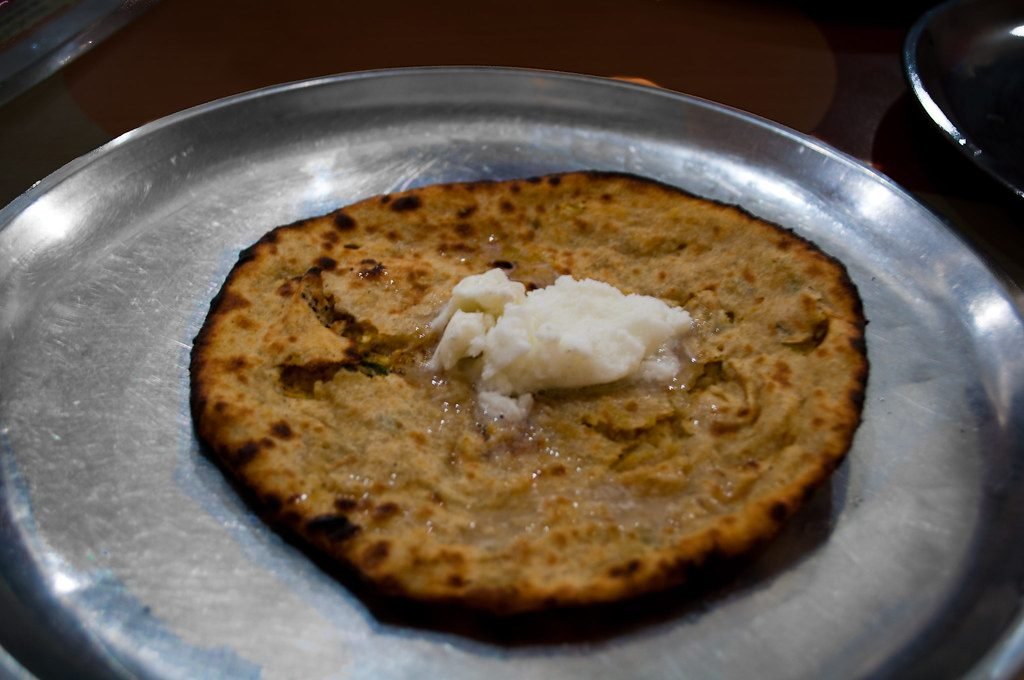
Serving Ideas
- White butter (makhan) on top with mixed achar.
- Plain dahi or mint raita.
- A hot cup of doodh patti or lassi.
- Green chutney made with mint, coriander and yogurt.
- For a heavier breakfast, a fried egg on the side.
Variations: add grated cheese for kids, mix in finely chopped spinach, or try a keema aloo filling for a weekend special.
FAQs
Why does my aloo paratha break while rolling?
Usually the filling is lumpy or wet, or the dough is too stiff. Mash potatoes smoothly, rest the dough and roll with light pressure.
Can I freeze aloo paratha?
Yes. Half-cook parathas without ghee, cool them, stack with butter paper between them and freeze. Cook straight from frozen on a hot tawa with ghee.
Which potatoes are best for paratha?
Starchy, older potatoes that are not watery work best. Boil them whole with the skin to keep them dry.
Can I make aloo paratha without onion?
Yes. Many families skip onion because it can make the filling wet. The paratha is still very tasty with spices and coriander.
How many calories are in one aloo paratha?
It depends on size and the amount of ghee. A medium homemade paratha cooked with ghee can be fairly high in calories, so use less fat if you are watching your diet.
Try this aloo paratha recipe this weekend and tell us how it turned out. Do you like yours with achar, dahi or chai? Share your family’s favourite style in the comments.