
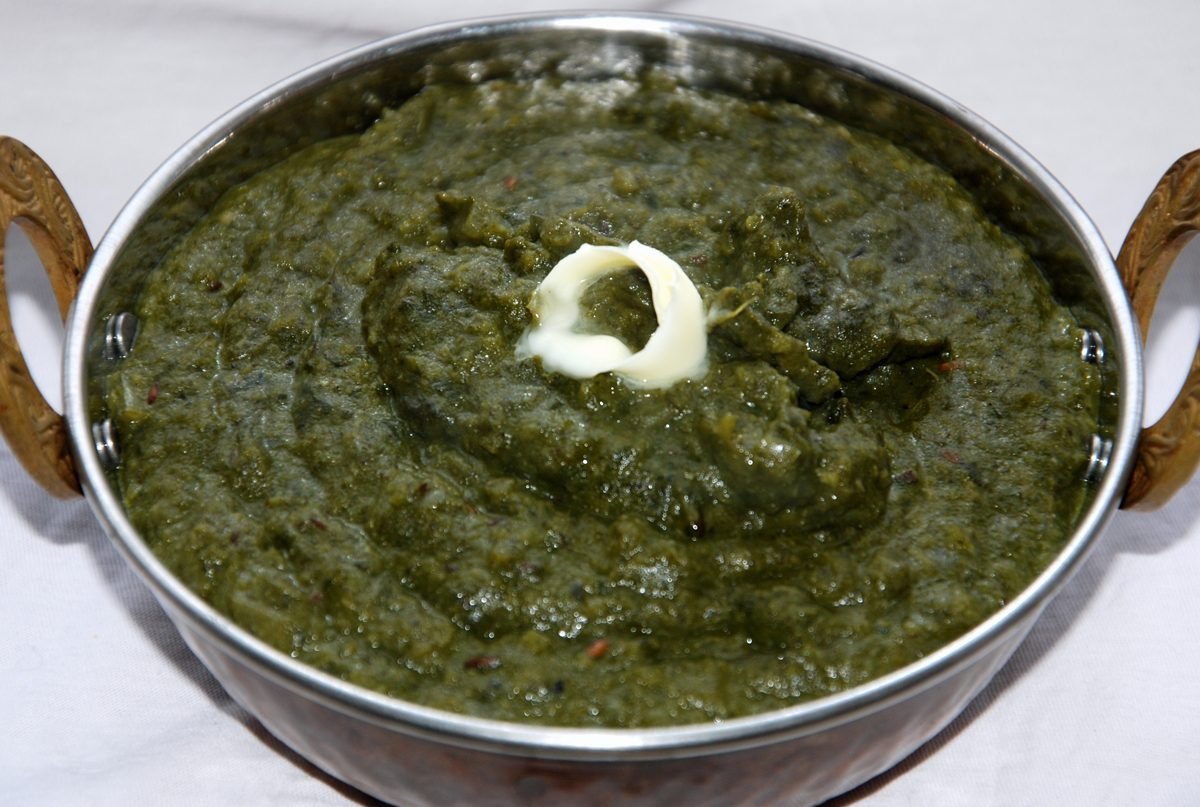
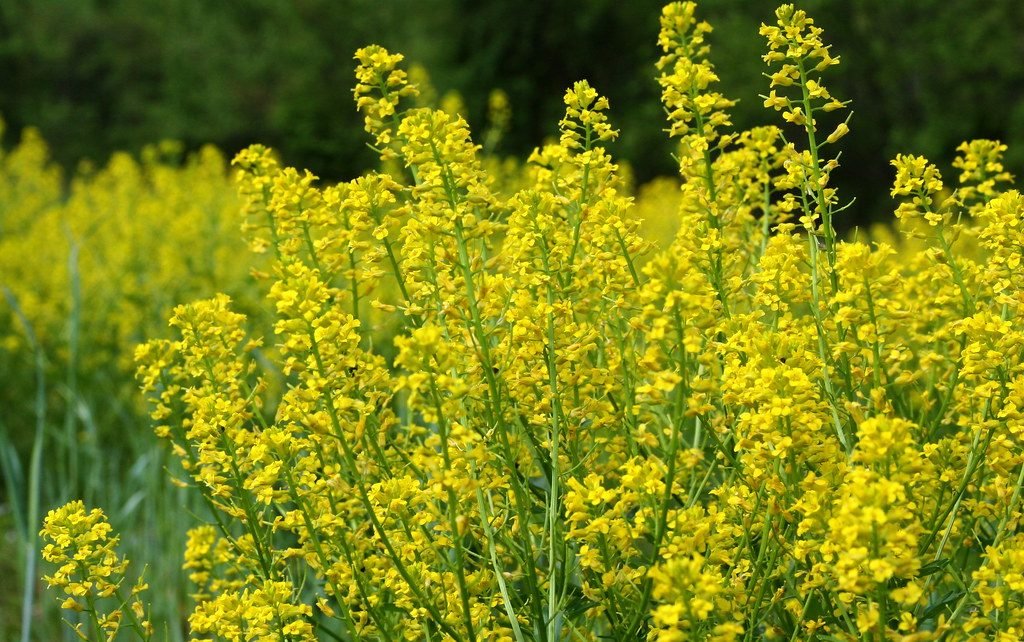
When the first cold mornings arrive in Punjab and the fields turn yellow with mustard flowers, every Punjabi kitchen starts thinking of one dish: saag. A bowl of slow-cooked greens with a spoon of white butter (makhan), next to hot makki ki roti and a glass of lassi, is pure winter comfort. In this guide you will learn an easy, home-style sarson ka saag recipe along with soft makki ki roti that does not break, plus tips our grandmothers used for the best taste.
This recipe uses a pressure cooker to save time and gas, but we also explain the traditional slow handi method for weekends.
Ingredients for Sarson Ka Saag (Serves 5–6)
Buy saag from the sabzi mandi in the morning when it is fresh. In November–January, a bundle of sarson in Lahore or Faisalabad markets is usually affordable.
| Ingredient | Quantity | Note |
|---|---|---|
| Sarson (mustard greens) | 1 kg | Tender leaves and thin stems |
| Palak (spinach) | 250–500 g | Balances bitterness |
| Bathua (optional) | 150–250 g | Adds traditional flavour |
| Green chillies | 4–6 | Adjust to taste |
| Ginger | 2-inch piece | Chopped |
| Garlic | 8–10 cloves | Chopped |
| Makki ka atta (maize flour) | 2–3 tbsp | Thickens the saag |
| Salt | To taste | About 1.5 tsp |
| Water | 1–1.5 cups | Greens release water too |
For the tarka (tempering)
- 3–4 tbsp desi ghee (or oil + a little butter)
- 1 medium onion, finely chopped
- 1 tbsp chopped garlic and 1 tsp chopped ginger
- 1–2 green chillies, chopped
- 1/2 tsp red chilli powder or 2 dry red chillies (optional)
- White butter (makhan) for serving
Sarson Ka Saag Recipe: Step by Step
Step 1: Clean and wash
Remove thick, hard stems from the sarson but keep the thin ones; peel the thicker stems if you like. Wash all greens in a large bowl of water 3–4 times, lifting them out each time so the sand stays at the bottom. Chop roughly.
Step 2: Pressure cook
Add sarson, palak, bathua, green chillies, ginger, garlic, salt and 1 cup of water to the pressure cooker. Cook on high heat until the first whistle, then on low heat for 20–25 minutes. Let the pressure release naturally.
Step 3: Mash (ghotna)
Open the cooker and mash the greens with a wooden ghotna or a hand blender. Do not make a smooth paste; a slightly coarse texture tastes better and looks traditional.
Step 4: Thicken with makki atta
Put the cooker back on low heat. Sprinkle the makki ka atta slowly while stirring to avoid lumps. Cook uncovered for 15–20 minutes, stirring often, until the raw smell of the flour disappears and the saag becomes thick.
Step 5: Tarka
Heat desi ghee in a pan. Fry the onion until light golden, then add garlic, ginger and green chillies for one minute. Add red chilli powder or dry chillies at the end and pour this sizzling tarka over the saag. Mix half in and leave half on top for a nice look.
| Method | Cooking time | Best for |
|---|---|---|
| Pressure cooker | About 1 hour total | Weekdays, saving gas |
| Traditional handi on low flame | 2.5–3 hours | Weekends, deeper taste |
| Slow cooker | 4–6 hours | Set and forget |
How to Make Soft Makki Ki Roti
Makki ki roti breaks easily because maize flour has no gluten. These steps make it much easier:
- Take 2 cups of makki ka atta and a pinch of salt. Some people add 2 tbsp of wheat flour to help it hold together.
- Add warm water little by little and knead with the heel of your palm for 5–7 minutes. The dough should be soft but not sticky.
- Knead each portion again just before making the roti; makki dough dries quickly.
- Make a ball and flatten it between wet palms, or press it on a plastic sheet or butter paper with your fingers.
- Place on a hot tawa, cook on medium heat until spots appear, flip, and press the edges with a cloth.
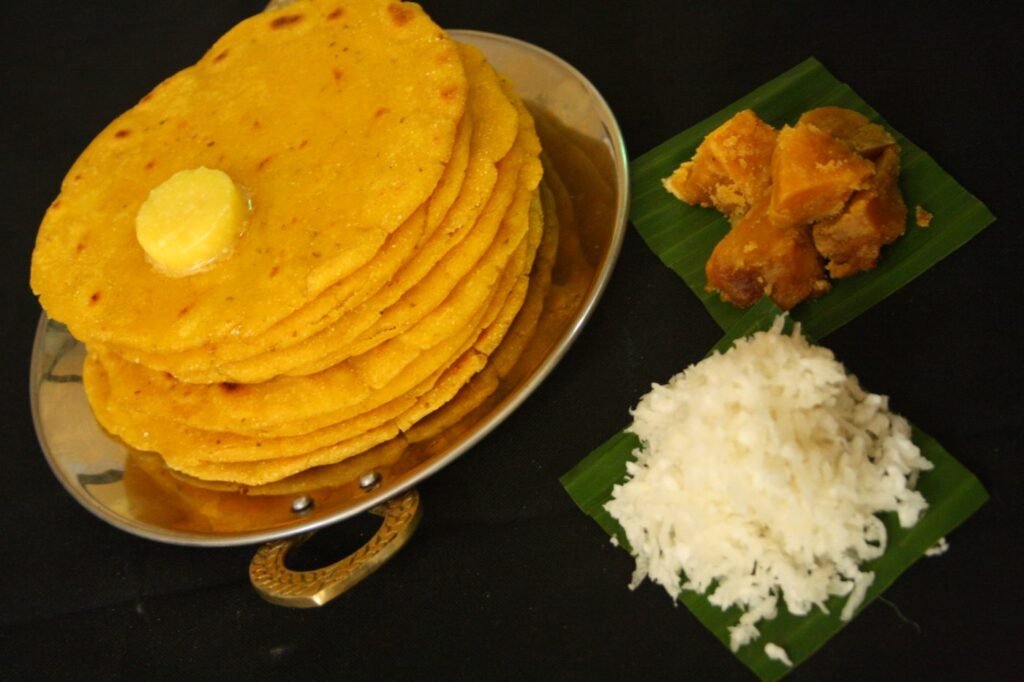
- Apply desi ghee or butter on both sides and serve hot.
Optional: mix grated radish (mooli), chopped methi or green chillies into the dough for extra flavour, as many families in central Punjab do.
Tips for the Best Sarson Ka Saag
- Balance bitterness: if sarson is bitter, add more palak or a small piece of turnip (shaljam).
- Cook longer: saag tastes better with slow cooking; many people say it is best the next day.
- Use desi ghee: ghee and white butter give the authentic village taste.
- Do not over-blend: a coarse texture is the traditional style.
- Salt at the start, check at the end: greens reduce a lot in volume.
How to Serve and Store Saag
Serve hot with makki ki roti, a spoon of white butter on top, sliced onions, green chillies, gur (jaggery) and a big glass of lassi. Some families also serve it with chawal or wheat roti.
- Fridge: keeps well for 3–4 days in an airtight box.
- Freezer: freeze in small portions (without tarka) for up to 2 months; add fresh tarka when reheating.
- Reheat: warm on low heat with a splash of water.
Leafy greens such as sarson and palak provide fibre and vitamins. Enjoy butter and ghee in moderation if you have heart or cholesterol concerns.
FAQs about Sarson Ka Saag Recipe
Why is my saag bitter?
Mature sarson can be bitter. Add more palak or bathua, cook longer, and make sure you remove very hard stems.
Can I make saag without a pressure cooker?
Yes, cook it in a covered handi on low heat for 2.5–3 hours, adding water when needed, then mash and thicken.
Why does my makki ki roti break?
Usually the water is not warm enough or the dough is not kneaded well. Knead each ball again just before shaping and use wet hands.
What is the season for sarson ka saag in Pakistan?
Fresh sarson is mostly available from November to February in Punjab.
Can I freeze sarson ka saag?
Yes, freeze it without the tarka for up to two months and add a fresh tarka when serving.
Do you make saag the Lahori way, the village way, or with your own twist? Share your family tips in the comments below.