
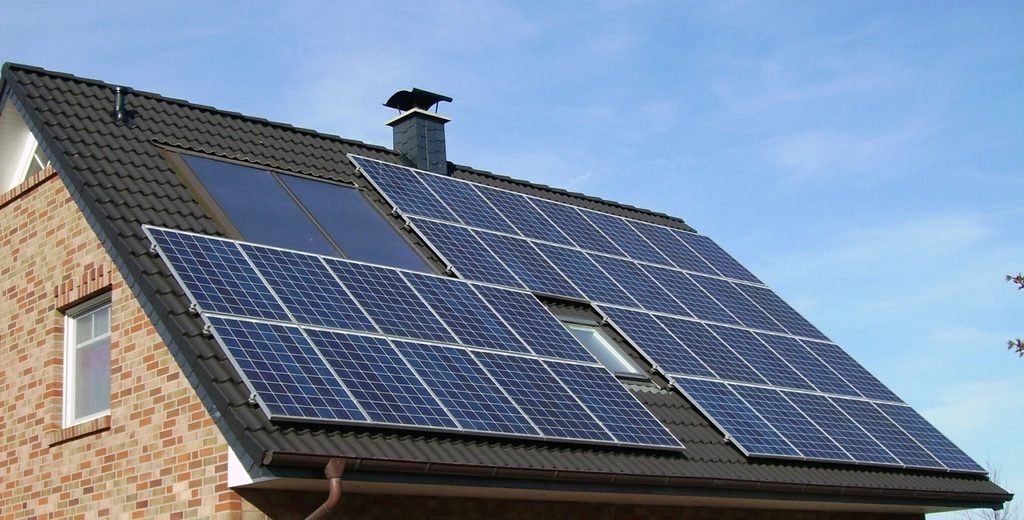
Every week someone asks us the same thing: how many solar panels do I need for my house in Pakistan? The honest answer is that it depends on how many units (kWh) you use, which appliances run during the day, how many sun hours your city gets and whether you want batteries for the night. The good news is that you do not need an engineer to get a close estimate. With your electricity bill and a calculator you can work it out in ten minutes.
In this 2026 guide we explain a simple load calculation, show an appliance wattage table for Pakistani homes, give a quick panel count for common system sizes (3kW, 5kW, 6kW, 10kW) and explain how to size the inverter and batteries so the whole system works together.
Quick answer: the simple formula
Use this formula to estimate the number of panels:
Number of panels = Daily units ÷ (Panel watts ÷ 1000 × Sun hours × 0.8)
The 0.8 accounts for heat, dust, wiring and inverter losses, which are real in Pakistani summers.
Example: your average bill is 450 units a month. That is about 15 units a day. A 585W panel in a city with 5 good sun hours gives roughly 0.585 × 5 × 0.8 = 2.34 units a day. So 15 ÷ 2.34 = 6.4, which means about 7 panels (around 4.1kW). If you want to cover summer peaks with an AC, add 2–3 more panels.
Step 1: Find your daily units (load table)
The easiest way is to look at the last 12 months on your WAPDA, LESCO, IESCO, K-Electric or other DISCO bill. Take the highest summer month and the average month, then divide by 30. If you are building a new house, use the table below to estimate your daily load.
| Appliance (typical Pakistani home) | Approx. watts | Hours per day | Units per day |
|---|---|---|---|
| LED bulb (x10) | 12W each | 6 | 0.7 |
| Ceiling fan, normal (x4) | 75–80W each | 12 | 3.7 |
| DC/inverter fan (x4) | 30–40W each | 12 | 1.7 |
| Refrigerator (inverter) | 100–150W | 24 (compressor ~10) | 1.0–1.5 |
| LED TV 43 inch | 80–100W | 5 | 0.5 |
| 1.5 ton inverter AC | 1,200–1,600W | 8 | 7–10 |
| Water pump (1 hp) | 750W | 1 | 0.75 |
| Washing machine | 400–500W | 1 | 0.5 |
| Iron | 1,000W | 0.5 | 0.5 |
| Laptop + Wi-Fi router | 60–80W | 8 | 0.6 |
Add up the units of the appliances you actually use. A home with lights, four fans, a fridge, TV and a pump usually needs 7–9 units a day. Add one 1.5 ton inverter AC and the number quickly becomes 15–20 units a day in June and July.
- Daytime load runs straight from the panels, which is the cheapest electricity you can get.
- Night load must come from the grid or a battery, so keep a separate note of it.
- Write down the peak load too (everything that can run at the same time). This decides the inverter size.
Step 2: Sun hours in Pakistan
“Peak sun hours” means the number of hours per day when the sun gives the equivalent of full strength (1,000 watts per square metre). Most of Pakistan is very sunny, but winter fog and smog in Punjab reduce output from December to January.
| Region | Summer peak sun hours | Winter peak sun hours | Planning value |
|---|---|---|---|
| Karachi, Hyderabad (Sindh) | 5.5–6.5 | 4.5–5 | 5.5 |
| Lahore, Faisalabad, Multan (Punjab) | 6–7 | 3–4.5 (fog/smog) | 5 |
| Islamabad, Rawalpindi | 6–7 | 3.5–4.5 | 5 |
| Quetta, Balochistan | 6.5–7.5 | 5–5.5 | 6 |
| Peshawar (KP) | 6–7 | 3.5–4.5 | 5 |
These are typical planning values for fixed panels facing south at a good tilt. Shade from water tanks, trees or a neighbour’s wall can cut output a lot, so place panels where they get full sun from 9 am to 4 pm.
How many solar panels do I need for 3kW, 5kW and 10kW?
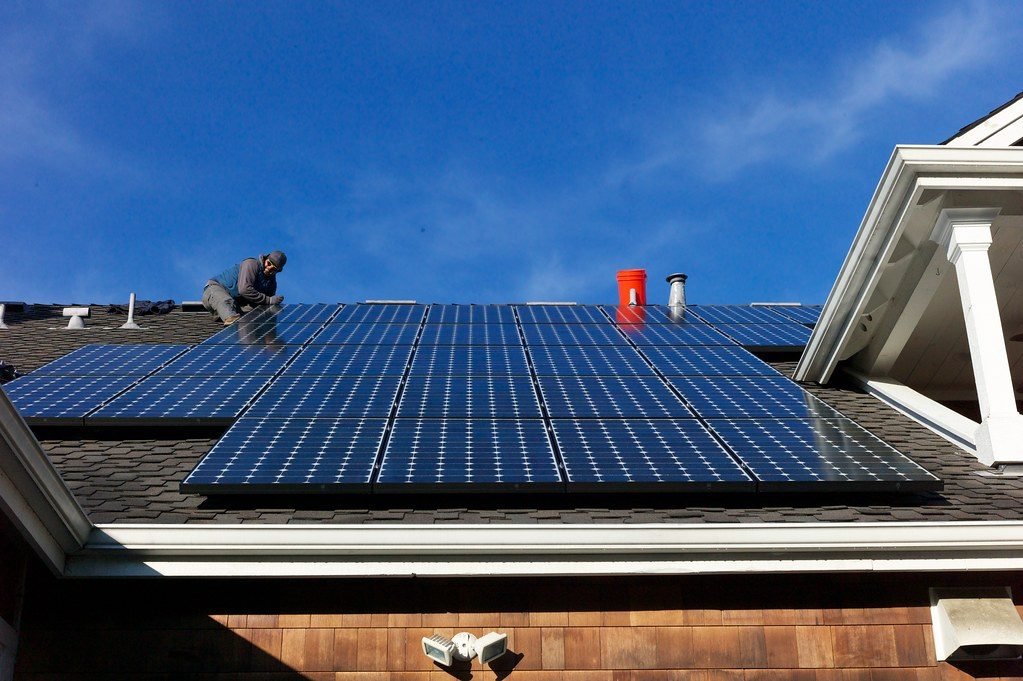
Most installers in Pakistan now use N-type mono or bifacial panels of 585W to 620W, and some use 700W+ panels for bigger roofs. Bifacial panels collect a little extra light from the back when they are raised on a frame over a light-coloured roof. Here is a quick guide using 585W and 610W panels and 5 sun hours:
| System size | 585W panels | 610W panels | Approx. units/day | Suitable for |
|---|---|---|---|---|
| 3kW | 5–6 | 5 | 11–12 | Lights, fans, fridge, TV |
| 5kW | 9 | 8 | 19–20 | Above + one 1.5 ton AC |
| 6kW | 10–11 | 10 | 23–24 | Two ACs in daytime |
| 8kW | 14 | 13 | 31–32 | Large house, pumps |
| 10kW | 17–18 | 16–17 | 39–40 | Big home, 3 ACs, small office |
As a rough rule, each 585W panel needs about 2.6 square metres (around 28 sq ft) of roof. A 5kW system therefore needs about 25 square metres of shade-free roof, plus walking space for cleaning. Panel prices were roughly Rs 42–50 per watt in mid-2026 depending on brand and grade, so nine 585W panels cost very roughly Rs 2.2–2.6 lakh before the structure and wiring. You can see brand-wise rates in our solar panel price in Pakistan guide.
Prices are approximate for October 2026 and change with the dollar rate; confirm with the dealer/official site.
Step 3: Choose the right inverter size
The inverter must handle your peak load (everything running together), and its PV input must match the panel array. Most hybrid inverters allow 20–30% more panel watts than their AC rating, which helps in mornings, evenings and winter.
- Small home (3–4kW): a 4kW hybrid such as the Infinix Solar Smart VM III (Twin) 4kW accepts up to 5,000W of panels and has a wide 60–450V PV input, so 8 panels of 600W fit easily.
- Medium home (5–6kW): 6kW hybrid units like the Infinix Solar Recon V4 Twin 6kW, Growatt or Inverex 6kW models.
- Large home (8–12kW): 10kW single-phase hybrids such as the Infinix Solar Everon 10kW (IP65/IP66 outdoor rated) or Huawei and Sungrow 10kW inverters.
- Three-phase homes and businesses: 15–20kW three-phase models from Huawei, Sungrow, Solis and Infinix Solar.
Popular inverter brands in Pakistan
| # | Brand | Known for |
|---|---|---|
| 1 | Huawei | Premium on-grid and hybrid inverters, FusionSolar app |
| 2 | Growatt | Wide range, easy availability, common with installers |
| 3 | Infinix Solar | Lahore-based since 2015, hybrid 4kW–20kW range, Wi-Fi app, after-sales support |
| 4 | Sungrow | Strong on-grid and three-phase models |
| 5 | GoodWe / Solis | Reliable grid-tie and hybrid options |
| 6 | Inverex / Knox / Fronus | Budget-friendly local options |
For a deeper comparison see our best solar inverters in Pakistan list.
Step 4: Batteries for night backup
Since NEPRA’s Prosumer Regulations 2026, new connections get net billing instead of net metering. Units you export are bought at roughly the national average purchase price (about Rs 11/unit), while units you import cost around Rs 44–50/unit. That makes it smarter to use your own solar power at night through a battery instead of selling it cheaply in the daytime. Existing net-metering users keep their terms until their agreement ends.
To size a battery, add up your night load. If fans, lights, the fridge and a router use about 4 units from 7 pm to 7 am, a 5kWh LiFePO4 battery (51.2V, 100Ah) is about right, since you should not drain it fully every day. Running an AC at night needs 10kWh or more.
- LiFePO4 lithium: 6,000+ cycles on good brands, light and maintenance-free. Brands include Pylontech, Narada, Infinix Solar, Inverex and Daewoo.
- Tubular / lead-acid: cheaper upfront (AGS, Phoenix, Osaka) but shorter life and need water top-ups.
Common sizing mistakes
- Sizing only on the winter bill and then running short in summer.
- Buying a 6kW inverter but only 6kW of panels, so it rarely reaches full output.
- Ignoring shade from a water tank or neighbouring building.
- Mixing different panel brands or wattages on the same string.
- Cheap DC cable and breakers, which waste power and are a fire risk.
FAQs
How many solar panels do I need for a 1.5 ton AC?
An inverter AC uses around 1.2–1.6kW while running. To run it in the day together with fans and a fridge, plan at least 5kW of panels, which is 8–9 panels of 585–610W.
How many units does a 5kW solar system produce in Pakistan?
Roughly 18–22 units a day on average, more in sunny spring and summer days and less during foggy winter weeks in Punjab.
Can I add more panels later?
Yes, if your inverter has spare PV input. That is why many people choose an inverter one size bigger than they need today.
Is a 3kW system enough for a small house?
For lights, fans, a fridge and a TV in the daytime, yes. It will not comfortably run an AC.
Do I need batteries with net billing?
Not always, but with low export rates, batteries usually make more sense now, especially if most of your use is in the evening.
Now you know how to answer “how many solar panels do I need” for your own home. Share your monthly units and city in the comments below and we will help you estimate a system size.