

In the quiet hours before Fajr, when most people are asleep, a believer who stands before Allah enjoys a special closeness that no other time offers. That prayer is Tahajjud namaz, the voluntary night prayer that the Prophet Muhammad ﷺ never left without reason.
This guide explains Tahajjud’s time, the number of rakats, the method according to the Hanafi school, the niyyah, a dua from the Sunnah, its virtues from the Quran and authentic hadith, and practical tips to wake up for it, even with a busy life in Pakistan.
What Is Tahajjud Namaz?
Tahajjud comes from the Arabic word hujood, meaning sleep; it refers to waking from sleep to pray. It is part of Qiyam al-Layl (standing in the night). For the ummah it is a highly recommended voluntary (nafl) prayer. According to the Hanafi school it is mustahab (recommended), and many Hanafi scholars describe it as a Sunnah of the Prophet ﷺ that brings great reward.
Virtues of Tahajjud from the Quran and Hadith
Quran, Surah Al-Isra 17:79
وَمِنَ اللَّيْلِ فَتَهَجَّدْ بِهِ نَافِلَةً لَّكَ عَسَىٰ أَن يَبْعَثَكَ رَبُّكَ مَقَامًا مَّحْمُودًا
Transliteration: Wa minal-layli fatahajjad bihi nāfilatan lak, ‘asā an yab‘athaka rabbuka maqāman maḥmūdā.
Translation: “And during a part of the night, pray Tahajjud with it as an additional prayer for you; it may be that your Lord will raise you to a praiseworthy station.”
The best prayer after the obligatory prayers
وَأَفْضَلُ الصَّلاَةِ بَعْدَ الْفَرِيضَةِ صَلاَةُ اللَّيْلِ
Transliteration: Wa afḍalus-ṣalāti ba‘dal-farīḍati ṣalātul-layl.
Translation: “And the most excellent prayer after the obligatory prayer is the prayer during the night.” Reference: Sahih Muslim 1163 (narrated by Abu Hurairah). Grade: Sahih.
Allah’s special call in the last third of the night
يَنْزِلُ رَبُّنَا تَبَارَكَ وَتَعَالَى كُلَّ لَيْلَةٍ إِلَى السَّمَاءِ الدُّنْيَا حِينَ يَبْقَى ثُلُثُ اللَّيْلِ الآخِرُ يَقُولُ مَنْ يَدْعُونِي فَأَسْتَجِيبَ لَهُ مَنْ يَسْأَلُنِي فَأُعْطِيَهُ مَنْ يَسْتَغْفِرُنِي فَأَغْفِرَ لَهُ
Translation (meaning): “Our Lord, Blessed and Exalted, descends every night to the nearest heaven when the last third of the night remains, and says: Who is calling upon Me so that I may answer him? Who is asking Me so that I may give him? Who is seeking My forgiveness so that I may forgive him?” Reference: Sahih al-Bukhari 1145 (narrated by Abu Hurairah). Grade: Sahih.
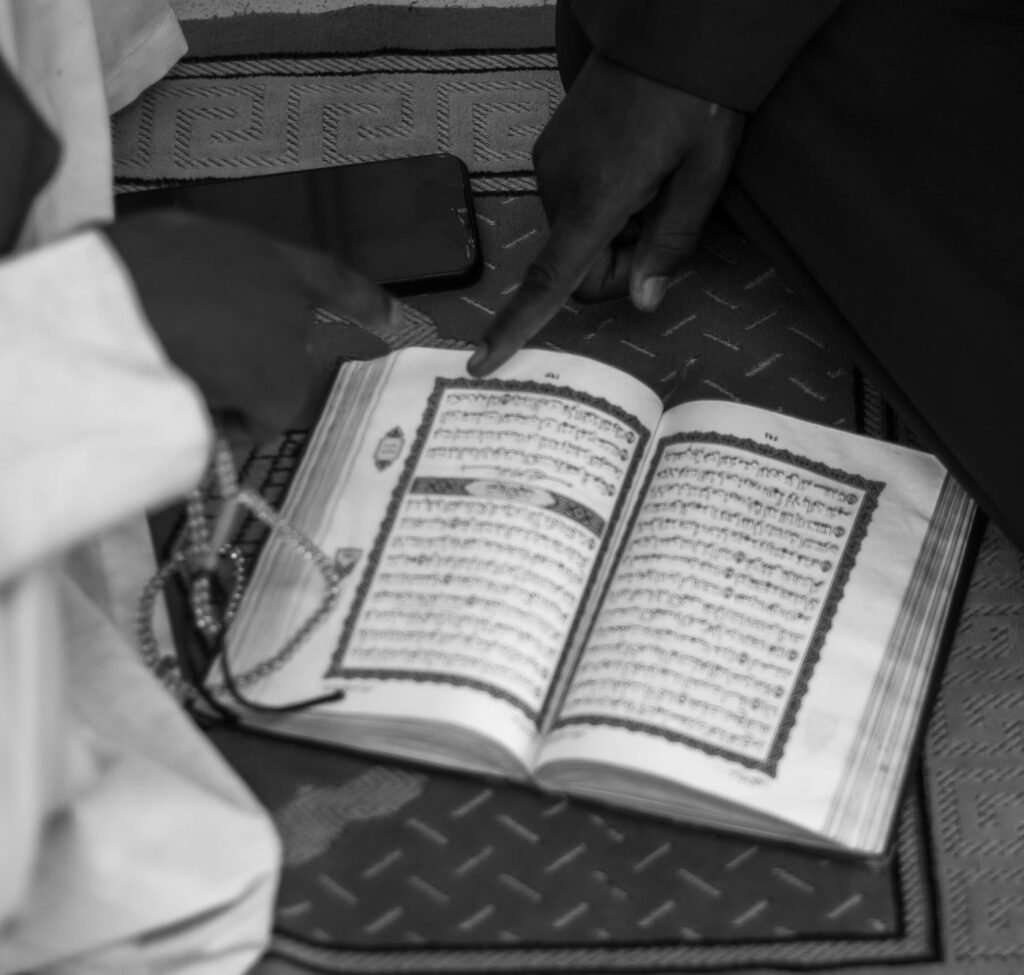
Tahajjud Time in Pakistan
Tahajjud can be prayed any time after Isha until the start of Fajr, but it is best after some sleep and in the last third of the night, as the hadith above shows.
How to find the last third of the night
- Note the Maghrib time and the next day’s Fajr time.
- Calculate the total length of the night and divide it by three.
- Subtract that one-third from Fajr time; that is when the last third begins.
| City (mid-October, approx.) | Maghrib | Fajr Starts | Last Third Begins (approx.) |
|---|---|---|---|
| Karachi | about 6:05 pm | about 5:10 am | about 1:45 am |
| Lahore | about 5:40 pm | about 4:50 am | about 1:20 am |
| Islamabad | about 5:40 pm | about 4:55 am | about 1:20 am |
These timings are rough estimates for mid-October and shift every day. Check your local masjid timetable or a reliable prayer-time app for exact times in your city.
How Many Rakats in Tahajjud?
There is flexibility. The minimum is 2 rakats, and you may pray more. Aisha (may Allah be pleased with her) said the Prophet ﷺ did not exceed eleven rakats (including Witr) in Ramadan or other months (Sahih al-Bukhari 1147, Sahih).
| Option | Tahajjud Rakats | Plus Witr (Hanafi) | Total |
|---|---|---|---|
| Minimum | 2 | 3 | 5 |
| Common practice | 4 | 3 | 7 |
| Sunnah practice (most common) | 8 | 3 | 11 |
| Extra (permissible) | 12 or more | 3 | 15+ |
In the Hanafi school, Witr is wajib and is prayed as 3 rakats with one salam, reciting Dua-e-Qunoot before ruku in the third rakat. If you are confident you will wake up, it is better to delay Witr until after Tahajjud; if not, pray Witr after Isha and then pray Tahajjud in twos without repeating Witr.
Tahajjud Namaz Method (Hanafi)
- Wake up and make wudu. Use the miswak if possible, as the Prophet ﷺ did.
- Make niyyah (intention) in your heart: for example, “I intend to pray two rakats of Tahajjud for Allah, facing the Qiblah.” Saying it in words is optional; the heart’s intention is what counts.
- Say Takbir-e-Tahrimah (Allahu Akbar) and recite Thana.
- Recite Surah Al-Fatihah and any surah in each rakat. Longer recitation is better if you can, but any surah you know is fine.
- Complete ruku, sajdah and sitting as in any two-rakat prayer, then finish with salam.
- Repeat in sets of two (Hanafi scholars also permit four rakats with one salam at night).
- Pray Witr (3 rakats) at the end if you have not prayed it after Isha.
- Make dua and istighfar with full attention. This is the time Allah calls out to His servants.
Dua for Tahajjud from the Sunnah
When the Prophet ﷺ got up at night for Tahajjud, he would begin with a long dua of praise. Here is its opening part:
اللَّهُمَّ لَكَ الْحَمْدُ، أَنْتَ قَيِّمُ السَّمَوَاتِ وَالأَرْضِ وَمَنْ فِيهِنَّ، وَلَكَ الْحَمْدُ، لَكَ مُلْكُ السَّمَوَاتِ وَالأَرْضِ وَمَنْ فِيهِنَّ، وَلَكَ الْحَمْدُ، أَنْتَ نُورُ السَّمَوَاتِ وَالأَرْضِ
Transliteration: Allāhumma lakal-ḥamd, anta qayyimus-samāwāti wal-arḍi wa man fīhinn, wa lakal-ḥamd, laka mulkus-samāwāti wal-arḍi wa man fīhinn, wa lakal-ḥamd, anta nūrus-samāwāti wal-arḍ.
Translation: “O Allah, all praise is for You; You are the Sustainer of the heavens and the earth and all that is in them. All praise is for You; Yours is the dominion of the heavens and the earth and all that is in them. All praise is for You; You are the Light of the heavens and the earth.” Reference: Sahih al-Bukhari 1120 (narrated by Ibn Abbas), Sahih. The full dua continues in the hadith.
After this, you may make dua in any language, including Urdu or Punjabi, for your needs, your parents, your family and the whole ummah.
Tips to Wake Up for Tahajjud
- Sleep early: Pray Isha and avoid late-night screens.
- Make a sincere intention before sleeping to wake for Tahajjud.
- Recite the bedtime adhkar, Ayat-ul-Kursi and the last three Quls.
- Set two alarms and keep your phone away from the bed so you have to get up.
- Take a short afternoon nap (qailulah) if your routine allows.
- Eat a light dinner; heavy meals make waking up harder.
- Start small: Even 2 rakats 15 minutes before Fajr is a great beginning. Consistency matters more than quantity.
FAQs
Can I pray Tahajjud without sleeping?
It is best after sleeping, but most scholars, including Hanafi scholars, say night prayer after Isha without sleep still earns the reward of qiyam al-layl.
What is the minimum Tahajjud namaz rakats?
Two rakats. You can increase to 4, 8 or more according to your ability.
Can women pray Tahajjud at home?
Yes. Women can pray Tahajjud at home in the same way, except during menstruation or post-natal bleeding.
Can I make up (qaza) a missed Tahajjud?
Tahajjud is voluntary, so there is no obligation to make it up. Aisha (may Allah be pleased with her) reported that when sleep or pain kept the Prophet ﷺ from his night prayer, he prayed twelve rakats during the day (Sahih Muslim 746, Sahih). So praying some nafl later in the day is a good practice.
Is reciting a long surah necessary?
No. Recite whatever you have memorised. Quality and sincerity matter more than length.
Tahajjud is a private meeting with your Lord. Start with two rakats this week and slowly build the habit. Please remember Bharosa Mart readers in your duas, and share in the comments what helps you wake up for the night prayer. For detailed fiqh questions, consult a qualified scholar or mufti.